How Much Weight Can Gate Hinges and Posts Carry?
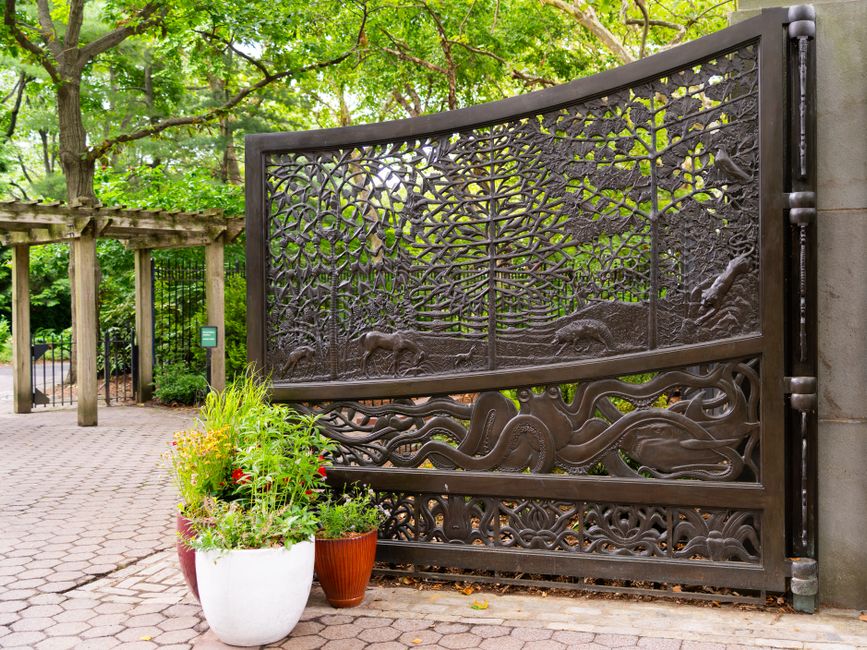
A gate can only be as heavy as its hinges, posts, and footings allow, and the posts usually fail first. A steel leaf hangs off one side of the opening like a lever, so the load on the hinge post is far greater than the weight of the gate alone. Understanding that leverage explains why some gates sag within a season and others hang true for decades.
Why weight is only half the story

A gate that weighs a few hundred pounds does not simply press down on the ground. It hangs from two hinges, and the weight sits out to the side, at the middle of the leaf. That sideways offset creates a twisting force on the hinge post, trying to pull the top of the post toward the latch side and push the bottom the other way.
The wider the gate, the longer the lever. Doubling the width of a leaf does more than double the strain on the post, because both the weight and the distance grow together. That is why a wide single swing gate needs a much stronger post than two narrower leaves meeting in the middle.
The three parts that carry the load
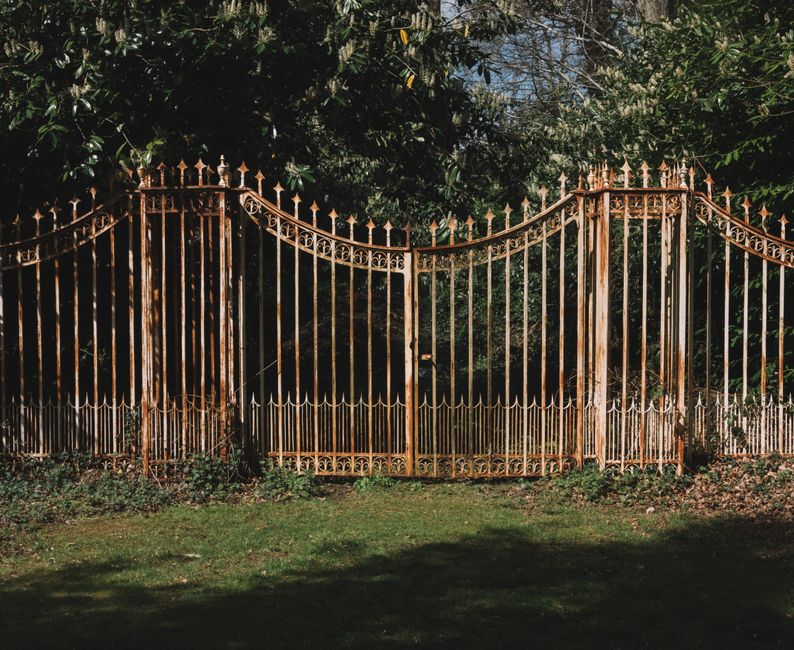
Every gate depends on three parts working together: the hinges, the post, and the footing. A weakness in any one of them shows up as the same symptom, a gate that droops at the latch end.
- Hinges carry the weight and allow rotation. They must be rated for the leaf, with bearings or bushings that do not wear flat.
- The post holds the hinges in line. Its wall thickness and size decide how much it flexes.
- The footing keeps the post from leaning. Its depth and width in the soil decide how well it resists the twist.
A thick post in a shallow hole still leans. A deep footing under a thin post still bends. A strong post and footing with light hinges still wears out the hardware. Good work matches all three to the gate.
Hinges, in plain terms
Hinges for a steel gate come in several types. Bolt-on strap hinges are light and fine for small gates. Weld-on barrel hinges carry heavier leaves and allow adjustment. Heavy-duty hinges with sealed bearings or grease points last longest on gates that swing many times a day, especially motorized ones.
The top hinge pulls toward the post and the bottom hinge pushes against it, so the top hinge carries a sideways load while the bottom hinge carries both the weight and a push. A good installer sets the bottom hinge to take the downward load and keeps the top hinge adjustable, so the gate can be leveled without cutting anything.
Posts and what they need
Hinge posts are usually square steel tube set into concrete. The size of the tube and the thickness of its wall decide how much it bends. A thin-walled post may look adequate on installation day and then slowly lean under the load. A thicker wall costs more but holds its line.
Wood posts are a poor match for a heavy steel gate. They rot at ground level, and the fasteners work loose as the wood dries and swells. Existing wood posts should be judged honestly, and replaced when there is any doubt about their strength.
Footings in limestone and clay
The ground around Cedar Park changes a lot from lot to lot. Limestone soil may be thin over rock, which can be good when a post can be anchored into solid stone, and difficult when digging stops early and the hole is shallower than planned. Clay swells when wet and shrinks when dry, and that cycle slowly works a post loose in a shallow footing.
A footing should reach below the layer that moves, and it should be wide enough to resist the twisting force. The top of the concrete should slope away from the post so that water runs off instead of soaking around the steel. Where rock stops the digging, the post may be set into a drilled hole and anchored with concrete, and the plan should say so before the work begins.
Wind turns weight into a bigger problem
A solid steel panel acts like a sail. On open lots near the 183A Toll Road or toward Leander, a steady gust can push on a large solid leaf with real force, adding to the strain on the hinges and the opener. A gate with open bars passes air through and sees far less wind load.
Wind also matters while the gate is open. A swinging leaf can be caught by a gust and slammed against a stop, which is hard on the hinges and the post. A catch or a stop that holds the gate open is cheap, and it protects the hardware.
Slide gates and the carriage
A slide gate puts weight on wheels and a track instead of hinges. The load goes straight down, so the post forces are lower, but the track needs a flat, solid base. A track set on shifting clay can warp, and the gate will bind or jump the rail. Keeping the track clear of debris and the base well drained makes a large difference in how long it lasts.
What an opener adds
An opener does not carry weight, but it adds force. Every start and stop sends a small shock through the post and the hinges. A leaf that is too heavy for the opener makes the motor work harder, and a leaf that sags makes the opener fight friction. Many opener problems are really weight and alignment problems that began with the gate itself.
Before an opener is added, the gate should swing freely by hand with very little effort. If it does not, the cause should be fixed first, because an opener will only hide the problem until something breaks.
Signs the load is too much
- The latch end of the gate drops lower over time and needs to be lifted to close.
- The hinge post leans toward the gate, or a gap opens between the post and the concrete.
- The hinges squeak, bind, or show bright wear marks.
- The gate drags on the driveway at the end of its swing.
- Cracks appear in the concrete around the footing.
Any one of these signs suggests that the gate has outgrown its support. Catching them early often allows a correction, such as adding a brace, resetting the post, or replacing the hinges, before the frame itself twists.
Ways to lighten the load
When a gate is too heavy for its posts, there are several practical fixes. Splitting a wide single leaf into two narrower leaves cuts the lever length sharply. Replacing solid panels with open bars reduces both weight and wind load. Using thinner infill inside a strong frame keeps the structure while cutting weight. A diagonal brace from the latch end up to the hinge side stiffens the frame and stops it from racking.
A wheel under the latch end, running on a smooth pad, takes some of the weight off the hinges, though it needs flat ground and regular cleaning to work well.
Questions to ask before ordering
A few direct questions help match a gate to its supports. What does the finished leaf weigh? How wide is the opening, and will it be one leaf or two? What size and wall thickness are the posts, and how deep will the footings go? Which hinges are specified, and how are they adjusted? How will the plan change if rock or clay is found when digging?
Clear answers show that the load has been thought through. Vague answers suggest that the hardware was picked by habit instead of by the job.
The short version
Hinges and posts carry far more than the weight of the gate, because leverage multiplies the load. Strong posts, deep and drained footings, and hinges rated above the leaf weight keep a steel gate swinging freely. Respecting those limits is the simplest way to avoid a drooping gate and a costly rebuild.